


System Integration: Enhancing Business Efficiency & Connectivity
Introduction
In today’s digital landscape, businesses rely on multiple software applications, databases, and IT systems to operate efficiently. System integration ensures that these disparate systems work seamlessly together, improving workflow automation, data consistency, and overall operational efficiency. Whether integrating cloud services, enterprise software, or hardware infrastructure, system integration plays a crucial role in digital transformation.
What is System Integration?
System integration is the process of connecting different computing systems, applications, and software solutions to function as a coordinated whole. This eliminates data silos, enhances communication between departments, and allows businesses to optimize processes by leveraging technology.

Types of System Integration
Enterprise Application Integration (EAI)
✔ Connects business applications like ERP, CRM, and HRMS.
✔ Ensures real-time data exchange between enterprise software.
Cloud Integration
✔ Connects on-premise and cloud-based applications.
✔ Enables businesses to scale operations using cloud technology.
Data Integration
✔ Combines data from multiple sources into a unified view.
✔ Ensures consistency and accuracy for business intelligence.
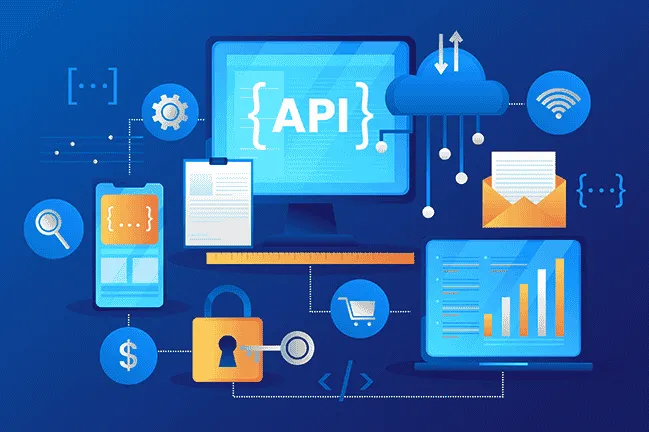
API Integration
✔ Uses Application Programming Interfaces (APIs) to link software applications.
✔ Facilitates real-time data sharing and automation.
IoT (Internet of Things) Integration
✔ Connects IoT devices with enterprise systems.
✔ Enhances monitoring, automation, and analytics.
Legacy System Integration
✔ Modernizes outdated systems by connecting them with new technologies.
✔ Reduces costs and extends the lifespan of existing infrastructure.
Steps in System Integration Process
Requirement Analysis
Assess business needs and existing IT infrastructure.
Identify system compatibility and integration goals.
System Design & Architecture
Develop a structured integration framework.
Define communication protocols, APIs, and data flows.
Implementation & Configuration
Install integration software and middleware.
Running Configure systems for seamless communication.
Testing & Validation
Conduct system tests to ensure data accuracy and performance.
Identify and resolve potential issues.
Deployment & Optimization
Deploy the integrated system across the organization.
ptimize processes for efficiency and scalability.
Maintenance & Support
Provide ongoing monitoring, troubleshooting, and updates.
Ensure smooth operations and system enhancements.
Benefits of System Integration
Improved Efficiency
Eliminates redundant tasks and automates workflows.
Data Accuracy & Consistency
Reduces errors and ensures reliable data exchange.
Enhanced Communication
Facilitates seamless collaboration across departments.
Scalability
Easily expands with business growth and technology advancements.
Cost Savings
Reduces IT complexity and operational costs.
Better Decision-Making
Provides real-time insights for data-driven strategies.
Security & Compliance
Ensures secure data transfer and regulatory compliance.
Industries Benefiting from System Integration
Finance & Banking
Connects payment gateways, fraud detection, and risk management systems.
Retail & E-commerce
Synchronizes inventory, CRM, and customer support solutions.
Manufacturing
Enhances production planning, supply chain, and IoT automation.
Education
Connects student management, e-learning platforms, and digital libraries.
Government & Public Services
Streamlines digital infrastructure for improved service delivery.
Future of System Integration
With advancements in AI, machine learning, and automation, system integration is evolving to provide smarter, self-optimizing networks. Businesses investing in integrated solutions will gain a competitive advantage through enhanced agility, efficiency, and innovation.
Our System Integration Services are as follows:

Data Integration

Application Integration

Cloud Integration
API Management